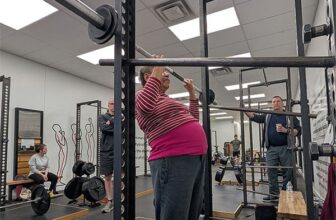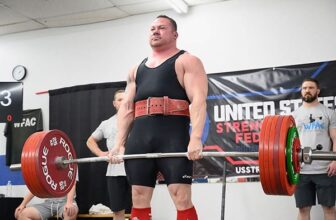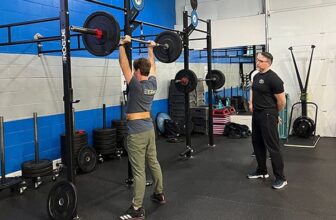

A few of my clients at Ground Zero Strength in Southern Idaho, and
online clients in surrounding western states, head into the mountains
every fall chasing deer and elk. After last season, several came back
talking about how their training made the difference, whether
stalking through steep drainages or shouldering heavy quarters for
the pack-out. Being strong lets you hunt longer, harder, and safer.
You handle what the hunt throws at you instead of getting
handled by it.
One late muzzleloader
hunt drove this home for me. My brother and I stalked across a
mountain canyon, over a high ridge, and into the next drainage to get
in range of a big cow elk. We killed her with only a couple hours of
daylight left, rain and snow moving in, and our camp in a completely
different basin. Rather than split the load into multiple lighter
trips, we decided to make it suck once – one heavy push down to the
jeep trail.
We both loaded a
front and rear quarter in our packs, and split the “goodie bag”
of back straps, tenderloins, heart, and trimming. With over 100
pounds of meat, gear, and rifle on our backs, we descended steep,
rocky, wet, sagebrush-covered slopes where one misstep could mean a
busted ankle, a broken arm, or a long tumble. Slow is smooth, smooth
is fast, especially when the alternative is a November helicopter
ride off a snowy mountain.

The slog involved a brutal descent, then miles through a thick
beaver-dam creek bottom with no trail. The pack pulled on my hips and
shoulders. The chest strap squeezed every breath. At 6’4″ and
240 lbs, I was suddenly a 350-lb system. Each step felt labored. Mind
games started: drop the pack, hang the meat, come back tomorrow? To
distract myself, I started calculating the combined center of mass of
the hunter-pack system and the moment arms involved. It didn’t help
the suck much.
We made it to camp –
cold, wet, and relieved. Victory beers tasted better than ever.
Despite the suck, I thought to myself how useful it was to deadlift
500+ lbs for reps when packing out and during long hikes and stalks.
It made me wonder: how many hunters miss opportunities, or worse,
become liabilities, because they aren’t prepared?
Most hunters never
leave the truck or UTV (these are often the guys that complain
hunting is crowded and non-residents are ruining hunting). But
lightweight backcountry hunting is growing. Hunters push deeper into
public land in Idaho and the Northwest, where mature elk and mule
deer live in the steepest, nastiest, most remote spots, far from
roads, people, and easy drags. If you’re too out of shape to handle
miles and thousands of vertical feet (up and down, loaded or
unloaded), you limit yourself to low-percentage roadside glassing.
Worse, heading into remote country without knowing your limits is
irresponsible. You risk yourself and your partners.

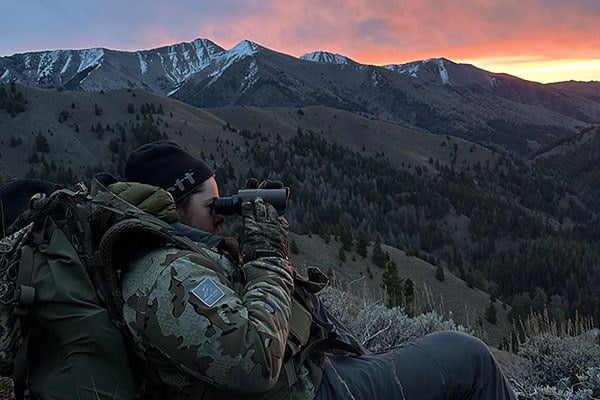
Glassing at last light. Backcountry hunting requires both physical endurance and mental
focus.
What the Hunting World Usually
Recommends
Search “strength
training for hunting” and you’ll find lists like “5 Exercises
Every Western Hunter Should Know”: Zercher squats, trap bar
deadlift, lateral lunges, asymmetrical shoulder presses, spider
crawls. Not bad movements, but often buried in CrossFit-style
metcons, high-rep circuits, VO2 max intervals, endless rucking
advice, incline treadmill hikes, core-balance drills, and
“functional” work.
Rucking – walking
with a weighted pack – makes sense on paper. You hike loaded in and
(hopefully) heavier out. But if you live in a city or flat area,
you’re stuck on sidewalks or treadmills. Few drive to real
mountains multiple times a week to simulate it. And while rucking
builds work capacity, it’s a specific practice, not the
driver of adaptation. Best to get strong first so that when you do
ruck, or carry a quartered elk, every step costs you far less.
Many programs push
“hunting-specific” conditioning: heavy on cardio, light on load,
chasing fatigue instead of force production. They treat hunting like
an endurance sport. It’s not. It’s hard, intermittent work under
load: steep climbs, side-hilling, uneven terrain, sudden bursts, then
hours of carrying 80–120+ lbs of quartered animal, gear, and rifle
on precarious ground. At the same time, there is a lot of sitting
around looking through glass for hours at a time, so you can’t call
it a big endurance event.
The
Starting Strength Approach: Build the Base First
The best preparation starts with getting generally strong using a
barbell. Heavy squats, deadlifts, presses, bench presses, and power
cleans with some chin ups and rows using progressive overload, the
heart of a Starting Strength-style Novice Linear Progression, build
the systemic strength that makes any loaded movement less taxing.
Why deadlifts help
packing out should be obvious: you pick heavy things off the ground
repeatedly when quartering and loading. Strong hips, traps, upper
back, and grip hold the pack stable. A big squat means your legs
drive under load without folding on steep descents or side-hills.
Press strength stabilizes shoulders under pack straps hour after
hour, and helps you hold your rifle or bow when it comes time to take
a shot under fatigue and adrenaline.
And here’s the key
that many miss: the stronger you get, the better you’ll be at
conditioning tasks like rucking. A bigger deadlift and squat not only
make you stronger but also make your cardiovascular system and
muscular endurance more efficient under load. Every rep of heavy
barbell work improves your ability to recover between efforts, carry
weight longer, and cover ground with less perceived effort. Strength
doesn’t totally replace conditioning as much as it raises the
ceiling of what your conditioning can do.
From both mine and my
client’s experience, guys who train this way consistently report
the same: hunts feel easier. Stalks take less effort and pack-outs
become grinds instead of emergencies. You stay mentally sharp because
the body isn’t failing.
The
Two-Factor Model of Hunting Performance
This approach aligns
with the Two-Factor Model of Sports Performance, which separates
preparation into two distinct parts: training and practice.
1. Training: Train for
the adaptations you need to perform better. For most hunters, that
means strength. Heavy barbell work drives the physiological changes
(bigger muscles, denser bones, better force production, improved
recovery, coordination, balance, mobility, power) that raise your
overall capacity. Get strong first, so the demands of the mountains hit a higher
baseline.
2. Practice: Use that
strength for hunting practice. Rucking, conditioning, shooting,
hiking, stalking, terrain navigation, all the specific skills and
repeated exposures that make you proficient in the field. Leading up
to the hunt, make hikes with your pack on, in the mountains if you
can. Take practice shots with your bow or rifle under fatigue while
you are out there. Practice hones familiarity, and it works best when
built on a foundation of strength.
The stronger base makes
every practice session more effective. Your newfound strength, mixed
with your effective practice makes the hunt (your performance) less
physically demanding overall. Allowing you to focus on enjoying the
experience of traversing mountains and pursuing game, not how out of
shape and weak you are.

Western big game country in Idaho: steep, remote terrain where elk
and mule deer live miles from roads.
My Checklist for Western
Hunting Prep
1. Build a base of
physical strength. Aim for solid strength numbers: a press of
135-200lbs, a bench of 225-315lbs, a squat of 315lbs to 405lbs, and a
deadlift of 405-500lbs or more. These are all broadly achievable for
most lifters within a couple of years of training. Even if your lifts
fall under these, you’ll be ahead of 90% of hunters physically just
by building any base of strength. The mindset from grinding
progressively heavier sets week after week, month after month,
carries over: everything in the field takes less relative effort when
you’re stronger.
2. Spend time on your
feet and build conditioning. Ruck multiple times per week. This is
your “practice” for hunting, not your training. Be on your feet,
a lot. Simple things like The Industry Standard 10,000 steps a day
add up. Add running, assault bike, rowers, or sprints if you can
handle it to build some cardio capacity. Bonus, but not mandatory in
addition to your strength work.
3. Fit and break-in
your boots properly. A $500 pair of Crispi hunting boots isn’t ready
to go out of the box, and they will tear you up if they are not
properly fitted. I learned that the hard way. Spend some money on
good insoles as well. Go to a reliable dealer that can help you with
this. Bloody, blistered, and angry feet will wreck your hunt no
matter how strong or prepared you are.
Remember: endurance
comes faster than strength. One to two months of hiking/rucking
builds the legs and lungs. But strength takes months and years of
progressive barbell work, and it pays dividends for years. There is a
reason it is called a “persistent adaptation.”
Judge
Yourself Honestly
I evaluate guys by one
question: would this person be a liability on a backcountry big game
hunt? Can he hike 4-8+ miles and thousands of vertical feet (snowy
or not), stay composed for a stalk, then pack multiple heavy loads,
on JetBoil coffee and freeze-dried beef stroganoff?
Remember, big game
animals aren’t dumb. They live where water, food, and not getting
shot-at intersect, which is often miles from roads, in steep, remote
country. To hunt them successfully on public land, you had best be
prepared to go there. Strength training is the ticket to opportunity
and safety, and shouldn’t be seen as optional.
Hunters spend thousands
on lightweight packs, rifles, optics, and gear. None of which matters
if your legs give out before you ever get to the glassing knob, you
are too tired to make a stalk, or you can’t shoulder a hindquarter.
Get strong first. The mountain will still suck, but you’ll handle
it by being able to go farther, hunt longer, and attack that next
ridge you otherwise would have avoided.
To paraphrase Mark
Rippetoe’s famous line, “Stronger people are harder to kill and
more useful in general,” I leave you with this: Strong hunters have
more options than weaker hunters, and are more useful in the
mountains in general.
Discuss in Forums
Credit : Source Post